Showing posts with label mystery. Show all posts

Thursday, January 19, 2012

Detection Unlimited and Penhallow by Georgette Heyer

You knew I'd be back to reading Georgette Heyer's mysteries soon. I had a couple of them on my shelves and wanted some comfort reading. Not the best choice, as it happened.

I picked up Detection Unlimited first. It was a slight, mostly fun read, just want I'd expected and no more. It's very much a typical Heyer mystery, although I wouldn't say it's close to her best. It has the usual motley cast of characters, jaunty dialogue, and baffling crime. I did guess the murderer, but not why the murderer did it; in fact, I was overthinking it, and the murderer did it for a very obvious reason. So, kind of disappointing plot-wise, but the characters were worth the read.

Then I picked up Penhallow, and my goodness was that a mistake. I wish someone had warned me. First of all, although it's marketed as a mystery, it's not. We get to witness the murderer doing the deed, and we know why and how. And it doesn't even happen until around page 300 (457 pages in my edition--a very long book). Even though by then I was baffled and annoyed at the wordiness, the grim tone, the relative lack of dialogue (jaunty or otherwise), and the slow pace, I still held out hope that Heyer would pull a twist--that the murderer would turn out to be mistaken, that Penhallow would have turned out to be murdered in some other way. But there is no twist.

The first 300 pages of the book are set-up on how monstrous Penhallow is, Penhallow being the bitchy, controlling head of the Penhallow family, and how much everyone hates him. Then he's murdered, and the remaining 150 pages are about how the family members react, and how surprised they are that they're not actually happier now that he's gone. Whee.

It's a good thing Penhallow wasn't the first Heyer mystery I picked up, because I would have missed out on a lot of her fun books.

Detection Unlimited B&N link
Penhallow B&N link

Thursday, January 12, 2012

Night of the Living Deed by E.J. Copperman

I'm a sucker for ghosts, apparently. In this one, Alison Kirby has recently bought an old Victorian house and has started restoring it herself. She plans to make it into a guesthouse, and she and her nine-year-old daughter Melissa will live there too. Melissa claims that someone died in the house, which Alison chalks up to her daughter's imagination. But after an accident with a ladder and a bucket of joint compound leaves Alison with a concussion and the ability to see ghosts, she has to face the fact that her daughter's right: not one but two people died in the house--recently, in fact. Last year. And they were murdered.

Alison is a likable character, often funny and always spunky. I hate the word spunky, but she is. She's just not annoying with it. The plot is pretty good and I didn't guess the murderer, mainly because I thought I'd figured it all out early and refused to change my mind despite evidence to the contrary.

The ghosts are the weakest part of the book, actually. I found them kind of annoying and not much help with the plot. I think there was supposed to be a little bit of a spark between Alison and the male ghost, but I didn't feel any chemistry between them. Alison's relationship with her daughter feels much more natural and realistic. I'm happy to see that there's a second book available and a third book about to come out. I'll probably read both.

B&N link

Sunday, January 8, 2012

Specimen Song and Wolf, No Wolf by Peter Bowen

Last summer I read the first book in this series, Coyote Wind, but before I could review it my mother had a stroke and I stayed in the hospital with her for a month--which is why the review, when I was able to get around to it, was so perfectly awful. I did really like that book, and I want to emphasize that now because I'm about to dump on the next two books.

Actually, the second book, Specimen Song, isn't that bad. I mostly wasn't happy with it because I picked out the murderer so easily. Basically, the murderer is the only named character who wasn't around in the first book. It was still atmospheric and I enjoyed the unusual setting: partly Montana, partly dense Canadian riverland. Main character Gabriel Du Pre is a French-Indian brand inspector who plays the fiddle and sometimes helps the sheriff out as a part-time deputy.

Then I got to the third book. I really hoped the plot would be better, and at first it seemed to be. Two extreme environmentalists are killed after cutting fences and shooting cattle, and Du Pre is depressed to think the murderer is probably someone he knows and likes--and someone he'll have to help arrest. Then more people are killed after environmentalists release wolves into the nearby mountains, and Du Pre is worried there's a serial killer around.

Unfortunately, the plot bogs down into a confusing mess. I've never read a murder mystery where, at the end of the book, I still wasn't clear on who the murderer was. It was that problem that has finished the series for me--I won't bother to read the next book--but I wasn't very happy with the writing either. The books are rather stylized and spare in style, but by the third book it was already starting to feel overdone. And on top of all that, I wasn't all that impressed by the anti-environmentalist message in the book, which bordered on the offensive at times.

It's disappointing that a series that started out so strong fell apart so quickly. I should have stopped reading after the first book.

Specimen Song B&N link (used book)
Wolf, No Wolf B&N link (used book)

Wednesday, December 28, 2011

The Unscratchables by Cornelius Kane

Here's one of those weird books that don't fit into any real category. It's a hard-boiled mystery peopled (ahem) entirely with cats and dogs. Intelligent ones. That wear clothes and carry guns and walk on their hind legs and wear shoes. No, I couldn't quite get my head around it either, but the book is surprisingly fun.

Max "Crusher" McNash is a detective bull terrier who doesn't like cats--especially not Siamese, after his experiences as a prisoner of war. But when a feral cat slashes and kills two rottweilers, then follows the murders up with the bloody murder of a guard dog, the chief of police has no choice but to call in the Feline Bureau of Investigation. Crusher is assigned to work with Cassius Lap, a Siamese whose delicate, pussy-footing attitude gets right up Crusher's nose. But Cassius soon turns up evidence of a conspiracy that goes far beyond a mere serial dog killer.

As I say, the book is fun. The author obviously had a blast inventing dog-and-cat stuff for his world. I had difficulty suspending my disbelief--I mean, dogs and cats just can't walk on their hind legs very comfortably, and they can't manipulate things like gun triggers very well with paws, and why would a dog need to wear shoes anyway? But if you can get past that, the mystery is pretty good, the characters are interesting, and the writing is solid.

B&N link

Sunday, December 25, 2011

Sammy Keyes and the Runaway Elf by Wendelin Van Draanen

I admit it took a while for me to really get into the book--a third of the way in, actually. I almost put it down a few times. I liked the mystery of the missing dog, but I hated the tense changes (which are constant and which I found super distracting). Then the book took a few twists and suddenly I was hooked.

The twists didn't have anything to do with the mystery, which I figured out as soon as the guilty party was introduced as a character. Instead, they had to do with the sudden addition of Sammy (Samantha) Keyes thinking about her mother, her 72-year-old friend, and her mean neighbor in a way that turns the book from a run-0f-the-mill preteen mystery to a thoughtful exploration of the meanings of friendship and loss. Yes, really.

Thirteen-year-old Sammy never intended to get mixed up with the Christmas parade, she just promised to help a friend who was part of the dog calendar float. But she gets stuck taking care of the star dog, a Pomeranian who jumps through a hoop--in this case, a wreath. Everything's going well until three people dressed as Wise Men toss angry cats at the float. The dogs go crazy, and when the dust settles, the Pomeranian is missing. While searching for it, Sammy discovers an elf--okay, an eight-year-old girl dressed as an elf--who's also been missing. But the dog is long gone and its owner holds Sammy responsible, especially after the first ransom note is delivered.

Sammy is full of energy, and outgoing without being obnoxious. Although she takes some risks, I never had a "no, Sammy, don't do it argh I can't believe you're being so stupid" moment. She's smart, too. But what I like most is that she's less interested in finding the dog to get herself off the hook than in solving the mystery of why the elf keeps running away from home. And when her mean neighbor falls and breaks an arm, Sammy becomes mixed up in the moving story of the woman's life. I like the way Sammy handles herself with someone who has never been nice to her but who needs her help--and not tangible help, but the sort that requires Sammy to think about her own motivations and those of others.

I haven't read the other books in this series, but I really liked this one. I'm glad I kept reading.

B&N link

Thursday, December 22, 2011

How to Wash a Cat by Rebecca M. Hale

In the real world, if you find human remains you're supposed to let the police know about it. But this isn't the real world, it's a book world where reality has nothing to do with anything. Oh, and the author gave the main character her same name, middle initial and all.

So, two great big strikes against the book. Third strike: it's badly, badly written and its plot is a mess and the characters are all obnoxious. That's several extra strikes, actually. I have no idea why I read the whole book.

When her Uncle Oscar dies, the accountant who goes unnamed until the very last line of the book inherits his business: an antique shop full of junk. She also inherits a key shaped like a tulip. Almost immediately, she-who-was-not-named-until-the-end starts discovering weird discrepancies about her uncle's death, including the discovery that the "preliminary autopsy" was never performed on her uncle, several people showing up suddenly to give her clues left recently by her uncle "in case anything happens to me," and several other people showing up to give her veiled threats. Oh, and she has two cats.

The plot is a godawful mess, but the characters are worse. I hated all the characters; they're all over-the-top without a smidgen of likability among them all. (Well, the cats are cute.) I especially hated the nosy neighbor Monty, who fancies himself a sleuth trying to uncover the mystery of an old tunnel rumored to be on the property. I hated Monty with the white-hot fury of a thousand suns. The main character isn't any better, though. She's a real wimp, totally without gumption. She's always having dizzy spells, or feeling faint or woozy or frightened or weepy or otherwise having to sit down and plunge into a flashback. She never does anything else and she's dumb as a stump.

But the writing! My god, the writing is bad. There are so many adjectives and adverbs in every sentence that it's hard to figure out what exactly is going on. Characters fidget around constantly while they talk. If the fidgeting and the adverbs/adjectives had all been edited out, the book would have been 50 pages slimmer--and it still wouldn't make any damn sense.

B&N link

Wednesday, December 21, 2011

Chelsea Mansions by Barry Maitland

Chelsea Mansions is the eleventh book in the Brock and Kolla mystery series, and now that I've read it I'm caught up. It was published a few months ago. I wouldn't be a bit surprised if it also ended up being the final (or next to final) book in the series.

When an elderly tourist is deliberately thrown in front of a bus after leaving the Chelsea Flower Show, it seems like a motiveless murder. Then a rich Russian expat is stabbed to death in the house next door to the hotel where the woman was staying. There's no obvious connection between the two, but Brock and Kathy both want to dig a little deeper and find out what's really going on. But Brock is sidelined by a bout of what seems at first to be the flu, and Kathy finds herself butting up against MI5.

The plot is only okay, certainly not one of the best plots in this series. The subplot of the nosy Canadian scholar who pushes his way into the investigation didn't do much for me. I won't spoil who he turns out to be, but let me just say that I definitely thought of Cousin Oliver being introduced on the Brady Bunch in a lame attempt to improve viewership. It didn't work for the TV show either.

I'm very glad I've caught up on the series. I'll still continue to read Maitland--and it looks like he's got another mystery out, one not part of this series, which I may chase down eventually. But I'm not all that into his books like I was at first. When I find myself thinking repeatedly, "Well, this book isn't the best in the series," it's not the individual book, it's the whole series.

B&N link

Tuesday, December 13, 2011

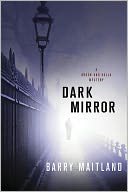
Dark Mirror by Barry Maitland

Well, I lied. Inadvertently, of course. I really did intend to wait a while before I read Dark Mirror, the tenth book in the Brock and Kolla mystery series, but I found myself reading it after all.

The plot is good, if the ending a tad unrealistic (which is something of a trend with these books). A university student working on her doctoral thesis collapses and dies in a London library, and is discovered to have been poisoned with arsenic. Kathy Kolla is assigned the case--her first really big case as a newly promoted Detective Inspector. But while the evidence starts to point to suicide, there are some strange details that don't add up.

Brock doesn't have much to do in this one, which disappointed me. He and Suzann argue and make up. Kathy proves once again that she has terrible taste in men. Same old same old. You know, the whole reason I fell for this series was the subtle characterization, the hints that Brock and Kathy might eventually end up together. That's long gone. When I was a kid, occasionally my brother would talk me into playing chess with him, and eventually he'd corner my king so that I had no choice but to move him back and forth, back and forth as my brother repeatedly moved his own pieces to keep my king in check without quite being able to checkmate me. This series has become that kind of chess game: repetitive, nothing new happening, the characters making the same moves over and over in each book. Maybe if I'd read them over the course of years instead of months I wouldn't have noticed it quite so much, but it's really obvious and really boring.

Anyway, there's only one more book in the series that I haven't read yet. And I warn you, I'm planning a trip to the bookstore on Thursday.

B&N link

Saturday, December 10, 2011

Spider Trap by Barry Maitland

This is the ninth book in the Brock and Kolla series. My local B&N didn't have this one in stock when I dropped by a few days ago, so I ordered a used copy online for a buck and also bought the ebook for $9.99 +tax so I could read it right away. I'm worried that my fury at the publisher for the inexcusably piss-poor formatting of the ebook has leaked over into my appraisal of the text. Seriously, the formatting was obviously just a bad scan without any further proofing. Punctuation (especially quote marks) was missing, words were missing, parts of nonsense words were inexplicably stuck into sentences, paragraph breaks were missing or extra breaks appeared halfway through sentences. And it's not like this was a small publisher without resources. I think Minotaur Books--you know, part of St. Martin's--can afford to pay someone to glance through its ebooks to make sure they're, you know, readable before they upload them for readers to pay freaking ten bucks plus Tennessee's ridiculous almost-10% tax.

So anyway, the book itself. Meh. It started out promising, with Brock and Kathy assigned to investigate the execution-style murder of two teenaged girls in a poor neighborhood. When human bones several decades old turn up nearby, Brock is convinced there's a connection between the old murders and the new--and he has to face his own past as a detective sergeant in the neighborhood, and the unsolved cases he left behind.

Promising, yes. But in reality, the book is more about how Kathy has rotten taste in men and poor judgment when the plot requires it of her, and how Brock will not freaking break up with Suzanne but just goes back and forth without making any kind of decision. After nine books, it's getting damn old. Much of the action is summarized or observed rather than participated in by the main characters--there's a chapter and a half consisting of Brock and Kathy watching something important happen on TV. Yeah, really.

I have the next book, Dark Mirror, sitting in front of me. It too sounds promising, but I think I'm going to take a break from the series for a little while (cue cheering from our faithful readers). Maybe when I return to the last two books, I will remember why I liked the series in the first place--because frankly, after the weakly plotted and frustrating Spider Trap, I'm not eager to read anything else by Maitland.

B&N link

Thursday, December 8, 2011

The Verge Practice and No Trace by Barry Maitland


The Verge Practice is the seventh book in the Brock and Kolla series. A world-famous architect's wife has been stabbed, and the architect has vanished. His car is found by the seaside with his clothes neatly folded and a note that just says "sorry," but police aren't buying it. They think he stabbed his wife and faked his suicide, and is hiding out in Barcelona. But when Detective Chief Inspector David Brock's team is assigned the case after it's gone cold, he and Detective Sergent Kathy Kolla start exploring other possibilities.

I really liked the book up until the time when I figured the whole plot out--with a hundred pages left to go. The theme of the book is basically The Meaning of Gender, and there are so many clues pointing to what actually happened that I didn't have any trouble figuring it out. I was really disappointed, even though the book itself is interesting as always. I also hated the ending.

No Trace is the eight book. In it, Brock's team has been assigned the case of two missing girls--and almost immediately, a third girl, six years old, is reported missing from her bedroom. Her father, a modern artist who made a splash five years ago after his wife's suicide, immediately starts a new work based on the girl's disappearance--and attracts immediate attention from his fans, who swarm into the area. But Brock and Kathy think there's something fishy about the third abduction, which is so much different from the first two.

This book was much, much better than the previous couple--dark, fascinating, themed The Meaning of Art (Maitland's insistence on themes is much more subtle usually than I'm making it sound, and adds to my enjoyment of the books). I thought I had guessed the murderer and was totally wrong, much to my pleasure. The plot has a number of twists that caught me by surprise, although the clues were laid cleverly and I should have caught them. And Brock's relationship with his sort-of girlfriend takes a surprising turn, while Kathy is still getting over her recent break-up with her boyfriend. In short, this is pure Maitland and exactly what I love about his books.

I'm glad I've reached the point in the series where the books are still in print and readily available. I bought No Trace at our local B&N and I'm hoping to pick up the next book today. But I am distressed that I've only got three more books to read before I've caught up and have to wait for the next one.

The Verge Practice B&N link (used book)
No Trace B&N link

Saturday, December 3, 2011

Babel by Barry Maitland

I was going to wait and review this one in one post with the next Brock and Kolla mystery after I read it, but what the hell.

Babel, the sixth book in this series, is set only weeks after the events of the previous book, Silvermeadow. Kathy is on leave and working through the panic and bad dreams she's been having as a result of those events. Her supervisor, Brock, is looking into the murder of a prominent philosophy professor* at a London university. It seems possible that the murder had something to do with religious fanaticism, and clues begin to point to the local Muslim community. Before long, Kathy finds herself drawn into the case informally even while she questions whether to retire from the police force.

The plot in this one was the weakest of all the Maitland mysteries I've read so far. I waited for the twist, but when it came, it was so goofy that I was really disappointed. I was also disappointed that I guessed a major plot point from the (unnecessary) prologue and turned out to be right. I don't want to find out I've guessed right; I want to believe I'm right and learn that I totally misinterpreted the clues. I want the characters to be right, ultimately. But Brock and Kathy misinterpret someone's vague statement without questioning whether they might be wrong, and it was glaringly obvious (to me, because I guessed right) that they did so to set up the 'what a twist!' moment at the end. But it was all spoiled for me because of that damn prologue. What the hell was Maitland thinking?

I did like the interaction between Brock and Kathy in this one. I really enjoy seeing the way their lives intersect more closely as the series progresses. So I'm about to pick up book seven.

*I admit to a surge of glee when I realized a philosophy professor had been murdered in this book, and imagined him to be the same philosophy professor from The Vices, which I read and disliked recently.

B&N link (used book)

Wednesday, November 23, 2011

Silvermeadow by Barry Maitland

Yeah, well, I couldn't help it. I picked up the fifth Kathy and Brock (or Brock and Kolla, depending on what edition you buy) mystery. What can I say, it was right there and I needed something to read.

In this one, a teenaged girl has disappeared from Silvermeadow, a huge shopping mall, right before Christmas. Since Brock's old nemesis North, a bank robber responsible for the murder of several cops, has been spotted at the mall also, Brock arranges for his team to move in, ostensibly to investigate the abduction but actually to find out more about North's movements and plans. Then the missing girl's body turns up--crushed by the mall's trash compactors and wrapped in plastic--and Kathy uncovers rumors that other girls have disappeared from Silvermeadow.

A lot of Silvermeadow, particularly the first section, is told from Brock's point of view. I like that since Kathy's been the focus in the last couple of books. I like both characters, and I love their interaction in this book, subtle though it is. The plot is good, although not as tricksy as the other books in the series.

I wasn't as keen on the fact that Kathy delays following up on several important clues just because she's having an affair with another character. Since when does having sex make someone stupid? One of the things I like about Kathy is that she catches stuff no one else does, not even Brock, but she's not portrayed as very perceptive in this one.

I've ordered the next two books, though. Because apparently they're made of crack.

B&N link (used book)

Wednesday, November 16, 2011

The Chalon Heads by Barry Maitland


The Chalon Heads is the fourth book in the Brock and Kolla series. I hadn't intended to read it right after the third one, but I couldn't stop myself. I've got the fifth book lined up but will try to control myself.

I didn't wholeheartedly love the third book, but The Chalon Heads was much stronger. Kathy Kolla and David Brock are called in to investigate the kidnapping of a rich stamp collector's young wife. The ransom notes each come with a rare stamp cut in pieces. The trouble is, the stamp collector is well-known to Brock as a tricky, manipulative man with an unsavory past. He and Kathy don't know how much they can trust him about anything, even the kidnapping.

The plot is clever, if not as intricate as some of the previous books' plots. I loved the uncertainty about what crime has actually been committed and who is actually the victim. And there are a few twists in plot and character that really surprised me, in a good way--and even more revelations at the very end, which I expected (but still didn't see coming). It's a great mystery.

The theme of sexism does keep popping up in the series. I appreciate this, especially since it doesn't take over the books. I do wish that it was more realistic, though. If sexism in real life was as blatant as it is in these books, it would be easy to call people on it. But it's fiction, and fiction exaggerates.

While I did enjoy the book, at three times during particularly fraught scenes the narrative switches to present tense. I'm sure Maitland did this to make the action more immediate. But OMG, I was so frantically furious at being thrown out of the story by a tense change during the juiciest parts of the book! I really, really hope that this was a one-time experiment and doesn't pop up in the other books.

B&N link

Thursday, November 10, 2011

All My Enemies by Barry Maitland

This is the third book in the Brock and Kolla mystery series, and while it was still good, it's much weaker than the previous two. Detective Sgt. Kathy Kolla starts her new job at New Scotland Yard's Serious Crime Division, working directly with DCI David Brock, and is immediately assigned to the violent murder of a young woman. As Kathy investigates, she finds connections between the woman's murder and a series of other brutal murders, all of them connected oddly with the theatre.

The plot was good, but not great. It relied a bit too much on coincidence and I didn't really buy the reasoning behind the murderer's actions. On the other hand, I was positive I had the whole plot figured out and I turned out to be 100% wrong.

The writing is still dense, but I found it a much faster read than the first two books. Maybe I'm just getting used to Maitland's style. There are a few short passages from other characters' points of view, but the story is almost completely told from Kathy's point of view, which I prefer. But although it's a 'Brock and Kolla mystery,' the two characters interact very little. Kathy barely thinks about Brock. I was disappointed since a big part of my interest in the series is the subtle development of the relationship between the two characters. Also, Brock scratches his beard so much in this one that I wondered if he had a skin condition, or fleas.

B&N link

Tuesday, November 1, 2011

Thus Was Adonis Murdered by Sarah Caudwell

It took me a while to get into this book. At first the studiedly arch tone really put me off, despite the clever humor. I couldn't imagine wanting to read an entire book written that way.

Then I got to the second chapter, which is mostly related through a letter from one of the characters to the others. Suddenly the whole thing clicked and I was enjoying the book. So if you try this one and don't like it, at least give it two chapters.

It's an oddly constructed murder mystery in some ways. The murder takes place in Venice, but the main character--dry Oxford don Hilary Tamar--never leaves London. Hilary is spending a month out of the summer housesitting for a friend and doing research, but what she's really doing is hanging out with a bunch of young lawyers, many of them former students of hers, while they themselves are spending as many working hours as they can get away with drinking coffee, visiting restaurants, and gossiping. One of the bunch, Julia, is on holiday in Venice. Ostensibly she's part of an Art Lover's tour, but really she's there to seduce someone attractive. When a handsome young man turns up dead in her bed, she's the only logical suspect. It's up to Hilary and her vapid friends to figure out what really happened.

The book is witty, sometimes self-consciously so but always with a tongue-in-cheek feel. The characters banter incessantly, which is part of the fun. And the plot, while a bit far-fetched, is well-constructed and a good mystery. I didn't figure out who the murderer was--in fact, my guesses were all way off.

I should also point out the awesome cover illustration by Edward Gorey. I actually owned this whole series at one point back when I had a huge Gorey collection, but I never read the books. It's too bad I didn't keep the others, because I think I'll read the rest of this series eventually.

Powell's link

Thursday, October 20, 2011

The Marx Sisters and The Malcontenta by Barry Maitland


These are the first two of a series. If I can chase down the third and fourth, expect to see review of them pretty soon. They're excellent. The first book was published in 1994, and the eleventh is being released next week. It looks like the second book is out of print. I found mine at a used book store.

The books are densely plotted, clever murder mysteries with two main characters, Detective Sergeant Kathy Kolla of the Metropolitan Police--that's London--and Detective Chief Inspector David Brock of Scotland Yard. Their careers intersect in the first book when Brock is assigned to help Kathy on her first murder investigation. An old woman has died under questionable circumstances--the coroner isn't completely convinced it was foul play, but not completely convinced it was natural causes. Kathy is certain something fishy is going on. She and Brock piece together a profoundly complicated (and thoroughly satisfying) mystery.

The second book takes place about a year after the first. Kathy's been assigned to investigate a suicide at a health spa--but she and the coroner are pretty sure it was murder. But when she's abruptly taken off the case, which is then closed and labeled a suicide, she seeks out Brock for his advice. Again the mystery is complicated and satisfying.

I've seldom come across mysteries--or heck, any books at all--as well plotted as these. I had no idea who the murderer was or why he/she did it. The clues are planted deftly, the red herrings are all important to the overall story, and there are multiple motives. While I enjoyed reading the books and the fairly dark (sometimes claustrophobic) tone is lightened by flashes of low-key humor, they also took some concentration--although I never felt like I was trying to hold a timetable in my head.

The main characters are likable for the most part. They're hard to get to know. It's obvious the two feel some interest in each other, but their relationship moves very, very slowly. I like that. It's a nice change from so many mystery series where the main characters are starting to grope each other before the first chapter's over. I'm really looking forward to seeing how Kathy and Brock interact in the other books.

Like the subtle characterization, the pacing is slow and sometimes bogs down under its own weight. The first book had a lot of lengthy exposition which was mercifully absent in the second; but a big chunk of the first section of the second book is told in flashback as Kathy relates the events of her investigation to Brock, and a big chunk of the second part is Brock investigating on his own, after he checks into the health spa as a patient. I didn't mind the slow pace; it too is a nice change, and enough happens that it kept me interested and reading. I only caught myself skimming toward the end of both books, when I got impatient with having to read lengthy descriptions when urgent stuff was happening.

Murder mysteries in the 90s were big on having themes--usually social issues that the writer addressed as part of the plot. These two books are sort of like that, although I'm not sure Maitland was doing it on purpose or if it just fell out that way. The Marx Sisters seems to have the theme of Infidelity, while The Malcontenta seems to be about Sexism. I didn't notice the themes until the second book, when Kathy's investigation is shut down and she seeks help from Brock, and then I thought back and realized the first book had a theme too. Like I said, Maitland may not have intended these to be themed books, and the themes may very well run throughout the rest of the series. The only reason I really bring it up is because of a few lines in The Malcontenta which really, really bothered me.

Kathy has been explaining the situation to Brock, and here are a few lines of him mulling things over: "[H]e was concerned at her obvious antagonism towards Tanner, Beamish-Newell and Long--all of the main male characters in her account so far, apart from Dowling, whom she seemed to be mothering. He worried whether she was being objective enough in her assessments." (page 53 of my edition) It seems like an odd thing for him to wonder about, particularly under the weird circumstances of the case. And it didn't go anywhere: nothing to do with the main plot, nothing to do with the subplots, no further developments along those lines in Kathy's relationships with male characters in the rest of the book. So basically Brock just shows that despite his affable and polite appearance, he's actually deeply sexist himself and is ready to discount his colleague's account because she's female and can't handle working alongside males. It made me like him a lot less, and also made me hypersensitive to how Maitland, a male author, portrays Kathy, a female character. But Kathy is a believably strong woman, so I'll give Maitland the benefit of the doubt--although Brock had better not start spouting more of that kind of shit in the next few books or I'll drop the series.

Anyway, all that aside, I did really enjoy the books. I'm hoping the next ones are available as ebooks so I can start reading the third one tonight.

B&N link The Marx Sisters
B&N link The Malcontenta (used book)

Tuesday, October 11, 2011

A Puzzle in a Pear Tree by Parnell Hall

Someone gave me this book or I'd never have read it. I was given the first book in this series years ago and couldn't finish it. These are terrible, terrible books. I suspect no one ever buys these books for themselves; they're only ever given as gifts.

This is the fourth book in the "puzzle lady" series. In this case, the puzzles are acrostics rather than crosswords. There are three or four of them in the book to solve, but if you don't want to bother the solutions are given a few pages after each puzzle. The puzzles are pretty good.

The writing, however, is awful. Every character speaks alike except for the "Scotland Yard" detective, who is so cheesy-fake-British that it's embarrassing. Author Parnell Hall uses the words wanna, gonna, gotta and so forth all the time, so that all his characters sound like they're speaking with mouths full of mashed potatoes. And his prose tics, such as leaving the conjunctions out of compound sentences, are so constant they started to get to me within a few pages--and even show up in dialogue.

The plot isn't all that great either. Cora Felton is taking part in the local Christmas play, as is her niece Sherry and pretty much everyone else in town as far as I can tell. When someone leaves an acrostic that, when solved, implies that the leading lady is in danger, Cora swings into action. Well, okay, she doesn't. For reasons no doubt made clear in the previous three books, despite being known as the puzzle lady, Cora can't work puzzles worth a damn. Her niece solves the puzzles. Then a high school girl playing Mary in an unrelated pageant is murdered, and the clues point confusingly to different people in different plays.

I won't spoil the plot, but I will say that it's one of those horrible mysteries where the clues hinge on timetables that are so convoluted no one but the author would be able to figure them out (or care). The murderer's motive is weak, and verges on ridiculous. The local cops are portrayed as morons who don't know the first thing about conducting a murder investigation, who are happy to take orders from the "Scotland Yard" detective (look, we do all know it's not called Scotland Yard anymore, don't we?), and who don't seem to care that Cora is committing felonies left and right as she "investigates." If I were a cop, I would shoot this book for being too stupid to live.

No one better give me any more of these awful books, because I refuse to read another one.

B&N link

Friday, October 7, 2011

No Wind of Blame by Georgette Heyer

I'm like a junkie with these Georgette Heyer mysteries. I try to stop, but then I pick another one up and want to just keep reading them and reading them. Eventually I'll have read them all, and then I don't know what I'll do.

Actually, I can just keep rereading one of them, since they're all pretty much identical. Heyer found a formula that worked and kept with it. In this one, the despicable Wally Carter is shot dead and everyone has a motive but no opportunity to have killed him.

Of course the murder takes place at a country estate, and the characters are pure Heyer: the rich wife who used to be on the stage, her frivolous nineteen-year-old daughter, Wally's sensible cousin Mary, a Russian prince who may be a fake and who's certainly only interested in the rich wife, the local farmer who loves the rich wife and despises the husband, the husband's ne'er-do-well friend, the local barrister's son, the local doctor, etc. As always, the real fun of a Heyer mystery isn't so much the mystery (although that's particularly good in this one, with a clever plot twist--I didn't guess the murderer) as the zippy, slang-filled conversation. I could listen to Heyer's characters talk all day long.

B&N link

Monday, September 12, 2011

Line Up for Murder by Marian Babson

I liked this book but there's something important you should know: it's not a murder mystery. It's only barely a mystery. I didn't mind, but some people might.

Dorrie Witson considers herself an expert queuer, so when the London department store Bonnard's holds a special sale to celebrate its 100th anniversary, Dorrie is third in line a week before the store reopens. Behind her are a mysterious young woman and her sullen boyfriend. As the days drag on and Dorrie gets to know her fellow queuers, she senses something strange is going on with the woman--and possibly with Bonnard's itself.

About a third of the way into this book, I caught myself wishing that there wouldn't be a stupid murder to mess up the cozy enjoyment of reading about these people waiting for a big sale. Lucky for me, there is no murder. Yes, one character has a gun and another character has (possibly) poison, but it's okay. No one dies. (Maybe I should have marked that as a spoiler, but someone does get shot at and someone does swallow the doctored drink, and it's not like I just told you who and what precisely happens.)

The plot is shallow and not really a mystery. It was just what I was looking for, though. I did have a problem with the racist overtones in Dorrie's (and other characters') dislike of two foreign characters. The book was first published in 1980, which is plenty recent enough for authors to be more sensitive when it comes to issues of race.

But except for that, and the weird non-mystery-ness of this mystery, it's a fun little book.

Powell's link (used book)

Thursday, August 18, 2011

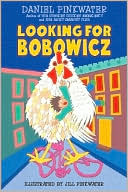
Looking for Bobowicz by Daniel Pinkwater

I've liked Daniel Pinkwater's writing ever since I was a kid, although I'm also the first to admit that he can be a little over-the-top with his plots. Looking for Bobowicz is one of his better books, a fun and fast-paced story about a kid who moves to Hoboken and gets mixed up in a mystery of a giant chicken and a phantom who steals bikes.

The writing is brisk and sure, a given when you're reading Pinkwater. It's also very funny. I loved Nick's parents, especially his dad, who provides a lot of the humor in the story.

I never figured out the mystery, although I thought I was getting close a few times (I wasn't). I thoroughly enjoyed the ride, though, and the solution was satisfying.

Powell's link (used book)